
1386. Cinema Seat Allocation
Description

A cinema has n rows of seats, numbered from 1 to n and there are ten seats in each row, labelled from 1 to 10 as shown in the figure above.
Given the array reservedSeats containing the numbers of seats already reserved, for example, reservedSeats[i] = [3,8] means the seat located in row 3 and labelled with 8 is already reserved.
Return the maximum number of four-person groups you can assign on the cinema seats. A four-person group occupies four adjacent seats in one single row. Seats across an aisle (such as [3,3] and [3,4]) are not considered to be adjacent, but there is an exceptional case on which an aisle split a four-person group, in that case, the aisle split a four-person group in the middle, which means to have two people on each side.
Example 1:
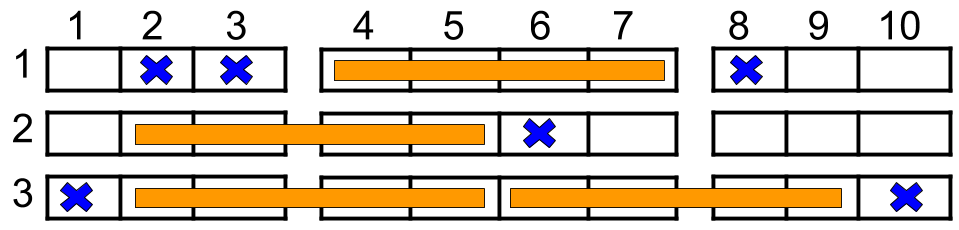
Input: n = 3, reservedSeats = [[1,2],[1,3],[1,8],[2,6],[3,1],[3,10]]
Output: 4
Explanation: The figure above shows the optimal allocation for four groups, where seats mark with blue are already reserved and contiguous seats mark with orange are for one group.
Example 2:
Input: n = 2, reservedSeats = [[2,1],[1,8],[2,6]]
Output: 2
Example 3:
Input: n = 4, reservedSeats = [[4,3],[1,4],[4,6],[1,7]]
Output: 4
Constraints:
1 <= n <= 10^91 <= reservedSeats.length <= min(10*n, 10^4)reservedSeats[i].length == 21 <= reservedSeats[i][0] <= n1 <= reservedSeats[i][1] <= 10- All
reservedSeats[i]are distinct.
Solutions
Solution: Greedy
- Time complexity: O(nlogn)
- Space complexity: O(n)
JavaScript
/**
 * @param {number} n
 * @param {number[][]} reservedSeats
 * @return {number}
 */
const maxNumberOfFamilies = function (n, reservedSeats) {
  const m = reservedSeats.length;
  let result = 0;

  const getSeats = (current, prev) => {
    if (prev === 2) prev += 1;

    if (current === 9) current -= 1;

    const seats = Math.floor((current - prev - 1) / 4);

    return Math.max(0, seats);
  };

  reservedSeats.sort((a, b) => a[0] - b[0] || a[1] - b[1]);
  reservedSeats.unshift([1, 0]);
  reservedSeats.push([n, 10]);

  for (let index = 1; index < m + 2; index++) {
    const [prevRow, prevSeat] = reservedSeats[index - 1];
    const [row, seat] = reservedSeats[index];

    if (prevRow === row) {
      const seats = getSeats(seat, prevSeat);

      result += seats;
    } else {
      const prevSeats = getSeats(10, prevSeat);
      const currentSeats = getSeats(seat, 1);
      const gapSeats = (row - prevRow - 1) * 2;

      result += prevSeats + gapSeats + currentSeats;
    }
  }

  return result;
};